
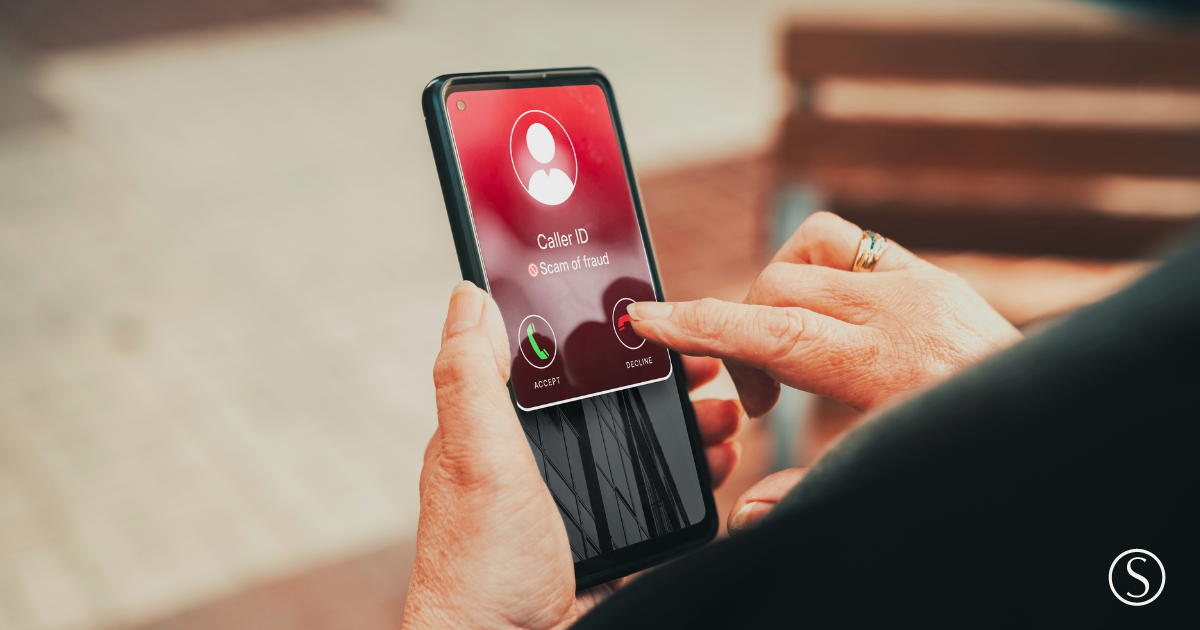
Financial scams are not always easy to recognize. Today’s fraudsters can imitate familiar companies, manipulate caller ID, create convincing emails and websites, and even use artificial intelligence to copy someone’s voice. A request may appear to come from your bank, a government agency, a financial professional, or even a family member.
Although the details vary, most scams rely on the same basic strategy: creating enough fear, excitement, or urgency that you act before you have time to think.
That is why one of the most effective ways to protect yourself is also one of the simplest: pause before you pay.
Warning Signs That Should Make You Stop
A message or phone call is not automatically legitimate simply because the sender knows your name, has some of your personal information, or appears to be calling from a familiar number. Be cautious when someone:
- Contacts you unexpectedly and asks for money or personal information
- Pressures you to act immediately
- Threatens arrest, account closure, service interruption, or other consequences
- Tells you not to discuss the situation with family members or trusted professionals
- Asks for a password, PIN, verification code, Social Security number, or account information
- Insists on payment by wire transfer, cryptocurrency, gift card, payment application, or cash
- Sends new or unexpected instructions for transferring money
- Promises unusually high or “guaranteed” investment returns
- Moves the conversation to an encrypted messaging platform such as WhatsApp or Telegram
Urgency is one of a scammer’s most effective tools. A legitimate organization should allow you time to verify a request and ask questions.
Familiar Voices and Names Can Be Faked
Artificial intelligence has made impersonation schemes more convincing. With a short audio clip gathered from a video or social media post, a criminal may be able to imitate the voice of a relative, business owner, or other trusted person.
In a common family-emergency scam, a caller may claim that a child or grandchild has been arrested, injured, or stranded and needs money immediately. Another person may join the call while pretending to be an attorney, police officer, or medical professional.
Similar tactics can be used to impersonate financial professionals and well-known investment experts. Fraudsters may copy names, photographs, credentials, and publicly available business information to make an investment opportunity or financial request appear legitimate.
If a request seems unusual, do not rely solely on the voice, name, photograph, phone number, or email address presented to you.
Pause, Disconnect and Verify
If you receive an unexpected financial request, resist the pressure to respond immediately. Instead:
- Stop the conversation. Hang up the phone, close the message, or step away from the situation.
- Do not use the contact information provided in the request. A phone number, email address, website link, or QR code included in a suspicious message could lead directly back to the scammer.
- Contact the person or organization independently. Use a phone number from an official website, account statement, business card, or another source you already trust.
- Talk with someone you trust. Scammers often discourage victims from discussing the request because another person may recognize the warning signs.
- Confirm all money-movement instructions. Before sending funds or changing existing instructions, verify the request through a separate and trusted method of communication.
If someone claims to be a family member, call that person directly at a number you already have. Families may also consider choosing a private word or phrase that can be used to confirm someone’s identity during an emergency.
Be Careful With Links, Attachments and QR Codes
Phishing messages are designed to look as though they came from a legitimate company or organization. They may claim that an account has been locked, a payment failed, suspicious activity was detected, or information must be updated.
Avoid clicking links, opening attachments, or scanning QR codes in unexpected messages. Instead, access the organization through its official website or mobile application. If you are unsure whether a message is legitimate, contact the organization directly.
Never provide a one-time verification code to someone who contacts you. These codes are intended to confirm that you are the person accessing an account. A caller asking you to read one aloud may be attempting to gain access in your name.
If Someone Contacts You About Your Investments
Be cautious when an unfamiliar person approaches you with an investment opportunity, especially through social media, a messaging application, or an online investment group.
Before investing:
- Confirm that the financial professional and firm are properly registered
- Research the investment independently
- Be skeptical of guaranteed returns or claims of little to no risk
- Do not send money based only on testimonials, screenshots, or online group discussions
- Contact your financial advisor before making a decision involving a significant or unfamiliar investment
Scammers may impersonate real financial professionals, so finding a legitimate name online is not enough. Contact the professional through independently verified information to confirm that the communication actually came from them.
What to Do If You Already Responded
Anyone can be targeted by a convincing scam. If you believe you sent money or disclosed information, act promptly:
- Contact the bank, financial institution, or payment provider involved
- Ask whether the transaction can be stopped or reversed
- Change affected passwords and enable multifactor authentication
- Monitor financial accounts and credit reports
- Preserve emails, text messages, receipts, phone numbers, and other evidence
- Report the incident to the Federal Trade Commission at ReportFraud.ftc.gov
- Consider reporting online financial fraud to the FBI’s Internet Crime Complaint Center at IC3.gov
Do not let embarrassment keep you from asking for help. The sooner the appropriate institutions are contacted, the better the chance of limiting additional harm.
When in Doubt, Contact Us
If you receive an unexpected request that appears to involve your investment accounts or someone claiming to represent Sage Capital Wealth Partners, please contact our office directly using the information you already know and trust.
Taking a moment to verify a request is never an inconvenience. A brief pause and a second conversation could prevent a costly mistake.
Pause. Verify. Then act.
Warm regards,
Sage Capital Wealth Partners
Phone: 864-999-4150
Email: admin@sagecapitalwealth.com
Website: www.sagecapitalwealth.com
Sources
- Federal Trade Commission. “What Are the Signs of a Scam?”
https://consumer.ftc.gov/consumer-alerts/2025/03/what-are-signs-scam - Federal Trade Commission. “Fighting Back Against Harmful Voice Cloning.”
https://consumer.ftc.gov/consumer-alerts/2024/04/fighting-back-against-harmful-voice-cloning - Federal Trade Commission. “How to Recognize and Avoid Phishing Scams.”
https://consumer.ftc.gov/articles/how-recognize-avoid-phishing-scams - Financial Industry Regulatory Authority. “Be Alert to Signs of Imposter Investment Scams.”
https://www.finra.org/investors/insights/be-alert-signs-imposter-investment-scams - Financial Industry Regulatory Authority. “Protecting Your Investment Accounts From GenAI Fraud.”
https://www.finra.org/investors/insights/gen-ai-fraud-new-accounts-and-takeover